January 2, 2026
For over two decades, MTV wasn’t just a television channel, it was the heartbeat of popular music. It told us what sounded cool, what looked cool, and sometimes even who we were supposed to be. From the first crackling notes of “Video Killed the Radio Star” to the wall-to-wall countdowns, premieres, and cultural moments that followed, MTV defined an era where music wasn’t just heard, it was seen.
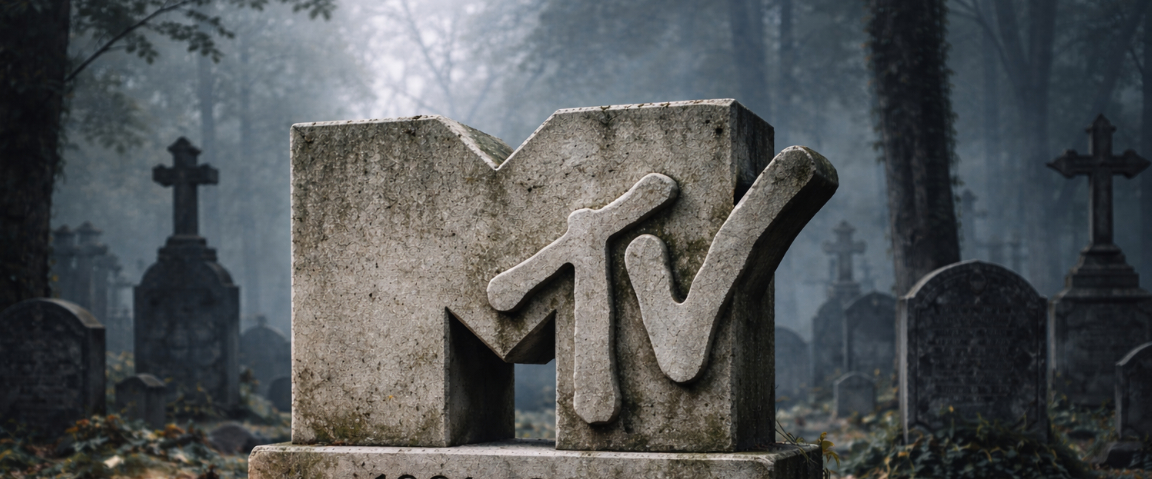
So when the doors finally closed on MTV as we knew it, it felt less like the end of a network and more like the end of a chapter in modern culture.
When Music Found Its Image
Before MTV, music lived primarily on the radio, on vinyl, and in the imagination. MTV changed that forever. Artists became brands, fashion icons, and storytellers in three minutes or less. A music video could launch a career, reinvent an image, or cement a legacy. Michael Jackson’s Thriller wasn’t just a song, it was an event. Madonna didn’t just release singles; she released statements. Nirvana’s unplugged performance didn’t just play, it echoed through a generation.
MTV curated taste. It told viewers what mattered and when it mattered. Waiting for a video to premiere or hoping your favorite song would climb the charts gave music a sense of anticipation that feels almost foreign today.
The Cultural Megaphone
MTV was more than music videos. It was a cultural megaphone. Shows like TRL turned fandom into a daily ritual. The MTV Video Music Awards became a stage for moments that would live forever in pop culture, some brilliant, some chaotic, all unforgettable. MTV News shaped how young audiences understood artists, politics, and social issues.
For a long time, if you wanted to reach youth culture, you went through MTV.
The Slow Fade
But culture doesn’t stand still. As the internet matured and broadband spread, the way we consumed music began to change. YouTube made every video available on demand. Streaming platforms put entire catalogs in our pockets. Algorithms replaced VJs. Waiting gave way to instant access.
MTV tried to adapt, pivoting toward reality television, lifestyle programming, and viral trends, but in doing so, it slowly drifted away from the very thing that made it iconic. Music became background noise rather than the main event. The channel that once defined cool was now chasing relevance in a world that no longer needed a gatekeeper.
Enter the Streaming Era
Video streaming didn’t just replace MTV, it fundamentally rewired how music is distributed and discovered. Artists no longer needed a single channel’s approval. A bedroom producer could upload a video and reach millions overnight. Playlists replaced countdowns. Data replaced instinct.
This democratization was powerful, but it came at a cost. The shared experience of watching the same premiere at the same time faded. Music became more personalized, more fragmented, and less communal. We gained convenience, but we lost a bit of the magic.
What MTV Leaves Behind
The closing of MTV’s doors isn’t a failure, it’s a reminder that media evolves, and even giants aren’t immune to time. MTV did what it was meant to do: it gave music a visual language and shaped generations of artists and fans. Its influence lives on in every music video drop, every viral performance, and every artist who understands that sound and image are inseparable.
MTV didn’t just broadcast music. It created moments. It taught us that music could be bold, controversial, visual, and transformative.
The End of a Channel, Not an Era
MTV may be gone, replaced by video streaming platforms that never sleep and never wait, but its DNA is everywhere. In every high-concept music video, every surprise release, every artist who understands the power of visuals, MTV still whispers from the past.
The screen may have changed. The delivery may be faster. But for those who remember racing home to catch a premiere or letting the TV play all day just in case something incredible came on, MTV will always be more than a channel.
It was the place where music lived.


